
Surgical Techniques
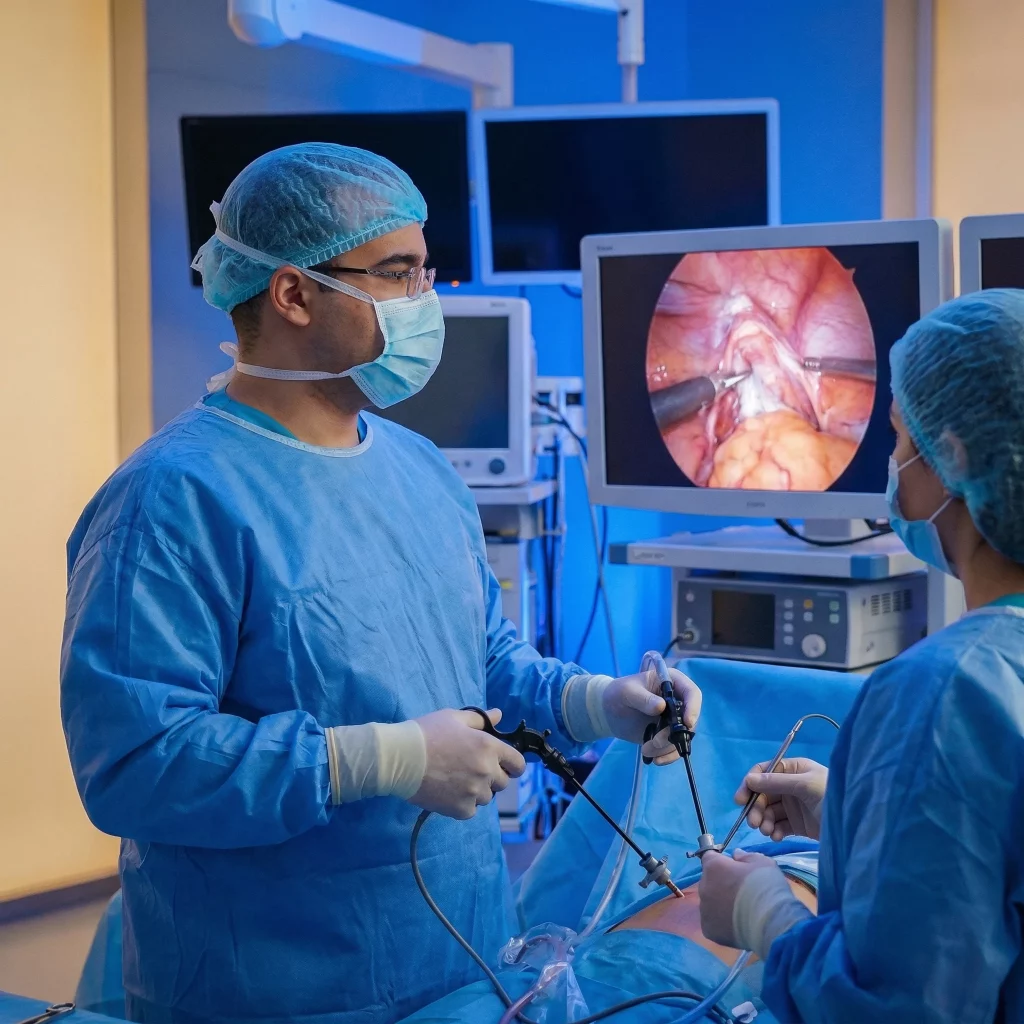
Laparoscopic bariatric surgery means smaller wounds and faster recovery.
Laparoscopic bariatric surgery has become the global standard in obesity surgery. Today, the vast majority of sleeve and gastric bypass procedures are performed this way instead of open surgery. In this article we explain how it works and what makes it the best choice for most patients.
💡 Quick summary
- Performed through small incisions using a high-definition camera.
- Less pain, a shorter stay and a faster return to normal life.
- Used for sleeve gastrectomy, all types of gastric bypass and revision surgery.
What Is Laparoscopic Surgery?
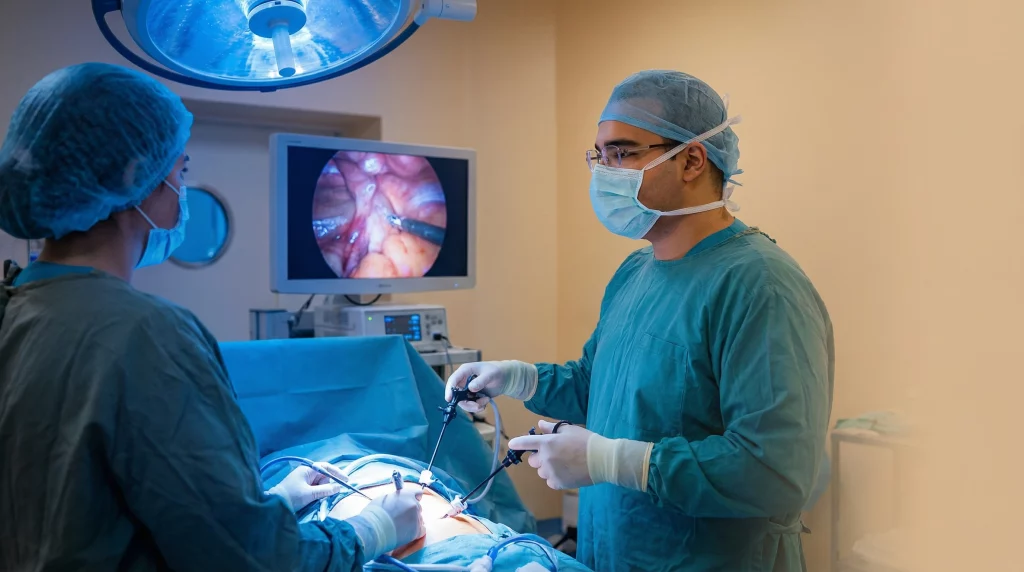
Laparoscopy is a technique in which the surgeon inserts a tiny camera and thin surgical instruments through small openings in the abdominal wall. The camera sends a magnified, clear image to a high-definition screen, giving the surgeon a detailed view of the internal organs without a large abdominal incision.
How Is Laparoscopic Bariatric Surgery Performed?
- General anesthesiaThe patient is fully anesthetized under the supervision of an anesthesiologist.
- Inflating the abdomenThe abdominal cavity is filled with carbon dioxide gas to create a safe working space and a clear view.
- Inserting the camera and instrumentsThrough several small openings roughly 5 to 15 millimeters long.
- Performing the procedureSleeve gastrectomy or gastric bypass using modern surgical staplers.
- Testing and closingChecking the staple lines, releasing the gas and closing the small openings.
Benefits of Laparoscopic Bariatric Surgery
Less pain
Small incisions mean much less post-operative pain and fewer painkillers.
Shorter stay
Most patients go home within one to two days.
Fewer complications
Lower risk of wound infection and incisional hernia than open surgery.
Small scars
A better cosmetic result with small scars that fade over time.
Laparoscopic vs. Open Surgery
| Comparison | Laparoscopic | Open surgery |
|---|---|---|
| Incision size | Small openings | Large abdominal incision |
| Post-operative pain | Mild | More severe and longer-lasting |
| Hospital stay | Usually one to two days | Several days |
| Return to activity | Within one to two weeks | Several weeks |
| Risk of hernia and wound infection | Low | Higher |
Types of Laparoscopic Bariatric Surgery
- Sleeve gastrectomy and its variations.
- Mini gastric bypass.
- Roux-en-Y gastric bypass.
- SADI-S.
- Revision surgery after previous operations.
- Laparoscopic gallbladder removal.
The success of laparoscopic surgery depends greatly on the surgeon’s experience and the hospital’s equipment, so choose a surgeon who specializes in bariatric and laparoscopic surgery.
For more trusted information, see the ASMBS overview of bariatric surgery procedures.
FAQs About Laparoscopic Bariatric Surgery
Is laparoscopic bariatric surgery safe?
Yes. Laparoscopic bariatric procedures are among the safest operations when performed by a specialist surgeon in a well-equipped hospital, with safety rates comparable to common operations such as gallbladder removal.
How many incisions does laparoscopic bariatric surgery need?
It is usually performed through 4 to 6 small incisions, each roughly half a centimeter to one and a half centimeters long.
How long does laparoscopic bariatric surgery take?
A sleeve gastrectomy usually takes one to one and a half hours, while gastric bypass procedures may take slightly longer depending on the case.
Does laparoscopic surgery leave visible scars?
The scars are very small and fade gradually over time until they are barely noticeable in most patients.
Laparoscopic Bariatric Surgery with Dr. Ahmed Shinkar
A specialist consultation to choose the right procedure for you using the latest laparoscopic techniques.
Book Your ConsultationDisclaimer: This article is for educational purposes only and does not replace consultation with a qualified physician.