
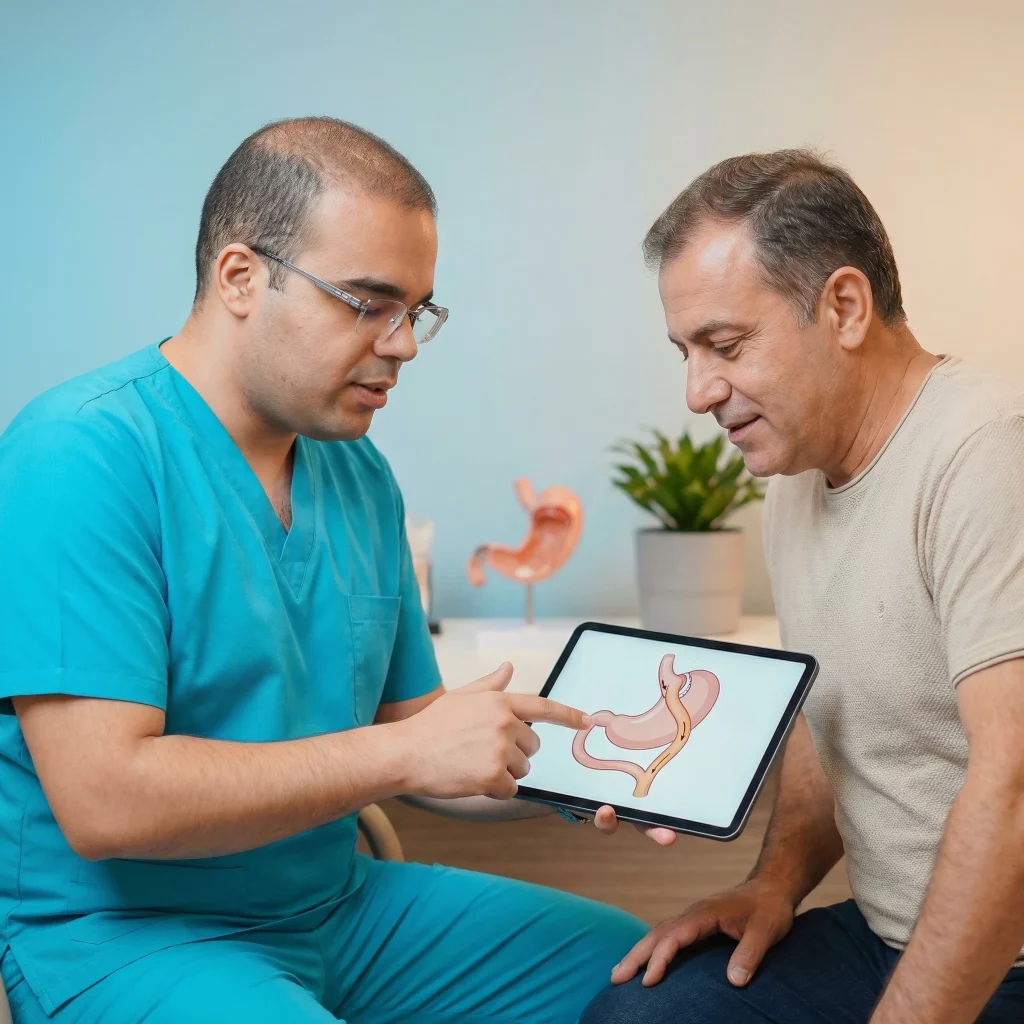
Nutrition After Surgery
Iron deficiency after bariatric surgery is common — and easy to prevent.
Iron deficiency after bariatric surgery is one of the most common nutritional problems, and it can show up as constant tiredness, hair loss or pale skin. The good news is that it is easy to detect early and effective to treat when you stick to your supplements and follow-up. In this article we explain the causes and symptoms, with real numbers from a clinical study co-authored by Dr. Ahmed Shinkar.
💡 Key Takeaways
- Iron is mainly absorbed in the first part of the intestine, which is bypassed after gastric bypass.
- In the study, iron stores (ferritin) fell from about 148 to 38 after one year.
- The drop was greater after mini gastric bypass than after a sleeve.
- Daily supplements and regular blood tests prevent most cases of anemia.
Why Iron Deficiency Happens After Bariatric Surgery
Less Stomach Acid
Iron needs an acidic environment to become easy to absorb, and a smaller stomach makes less acid.
Bypassed Intestine
In a gastric bypass, food skips the duodenum, the main site of iron absorption.
Smaller Meals
Many patients eat less red meat after surgery because portions are small.
In addition, women of childbearing age are at higher risk because of menstruation, as is anyone who had anemia before surgery.
What Do the Numbers Show?
In a 2025 study published in the Journal of Gastrointestinal Surgery of 92 patients with super obesity, iron levels were measured before surgery and after one year:
| Test | Before surgery | After 1 year |
|---|---|---|
| Ferritin (iron stores) | 148.5 | 38.4 |
| Hemoglobin (g/dL) | 12.8 | 10.8 |
| Serum iron | 57.1 | 47.2 |
Comparing the two operations, median iron after one year was 30.6 after mini gastric bypass vs 65.8 after a sleeve, and ferritin was 28.3 vs 45.7. This was despite all patients following the same supplement program.
Symptoms of Iron Deficiency After Bariatric Surgery
- Tiredness that seems out of proportion to effort.
- Pale face, lips and inner eyelids.
- Shortness of breath when climbing stairs.
- Hair loss and brittle nails.
- Headaches, dizziness and cold hands and feet.
- Unusual cravings, such as chewing ice.
Black stools or blood in vomit together with anemia need urgent medical review, as they may point to an ulcer or bleeding.

Preventing Iron Deficiency After Bariatric Surgery
- Daily supplementsTake the iron-containing multivitamin your doctor prescribes, and do not stop it on your own.
- Keep it apart from calciumLeave at least two hours between iron and calcium tablets, because they compete for absorption.
- Vitamin CTaking iron with a vitamin C source such as orange helps absorption.
- Avoid tea and coffeeDo not drink them with meals or with your iron tablets.
- Animal proteinInclude red meat, liver and poultry as much as you tolerate.
Treating Iron Deficiency After Bariatric Surgery
Treatment usually starts with iron tablets at a treatment dose set by your doctor. If the deficiency is severe, tests do not improve, or tablets are not tolerated, intravenous iron is used to rebuild stores quickly.
Tests are then repeated to check the response. That is why it is important to follow your schedule of blood tests after bariatric surgery.
Also read about vitamins after sleeve gastrectomy and hair loss after surgery, since low iron is one of its main causes.
FAQs: Iron Deficiency and Bariatric Surgery
When does iron deficiency appear after surgery?
It can appear during the first year, but it often develops slowly over months or years, so blood tests continue even after weight stabilizes.
Is iron deficiency more common after a sleeve or a bypass?
It is more common after a bypass because food skips the part of the intestine that absorbs iron. The study confirmed this: iron and ferritin were lower after mini gastric bypass.
Is healthy eating enough to replace iron?
Usually not. Small portions after surgery are not enough on their own, so daily supplements are needed along with a protein-rich diet.
When do I need intravenous iron?
For severe deficiency, when tests do not improve despite tablets, or when tablets cause stomach side effects.
Worried About Iron Deficiency After Bariatric Surgery?
Book a follow-up with Dr. Ahmed Shinkar to review your tests and plan the right treatment.
Book Your ConsultationDisclaimer: This article is for educational purposes only and does not replace a consultation with a qualified physician.